Concrete built for Kansas clay, Kansas winters and the salt that comes home on the car.
Driveways, driveway replacement, approaches and sidewalks under the City's permit, patios, stamped concrete, steps and stoops, garage and shop slabs, mudjacking and polyjacking, repair, sealing, removal and commercial flatwork across Olathe and Johnson County, by insured crews who order the right mix, build the base before the slab, and pull the right-of-way permit when the job reaches the street.
General liability and workers' comp · Free estimates · Written price good for 30 days · City right-of-way permits handled
- Mix
- 4,000 psi, 6–7% airWhat the ready-mix industry specifies for exterior slabs that see freeze-thaw and deicers
- Base
- 4 in compacted, over the clayGraded to drain away from the slab, deeper where the ground is soft or wet
- Right-of-way
- City permit, $50 per parcelRequired for the approach, curb cut and sidewalk; fees double if work starts first
- Inspection
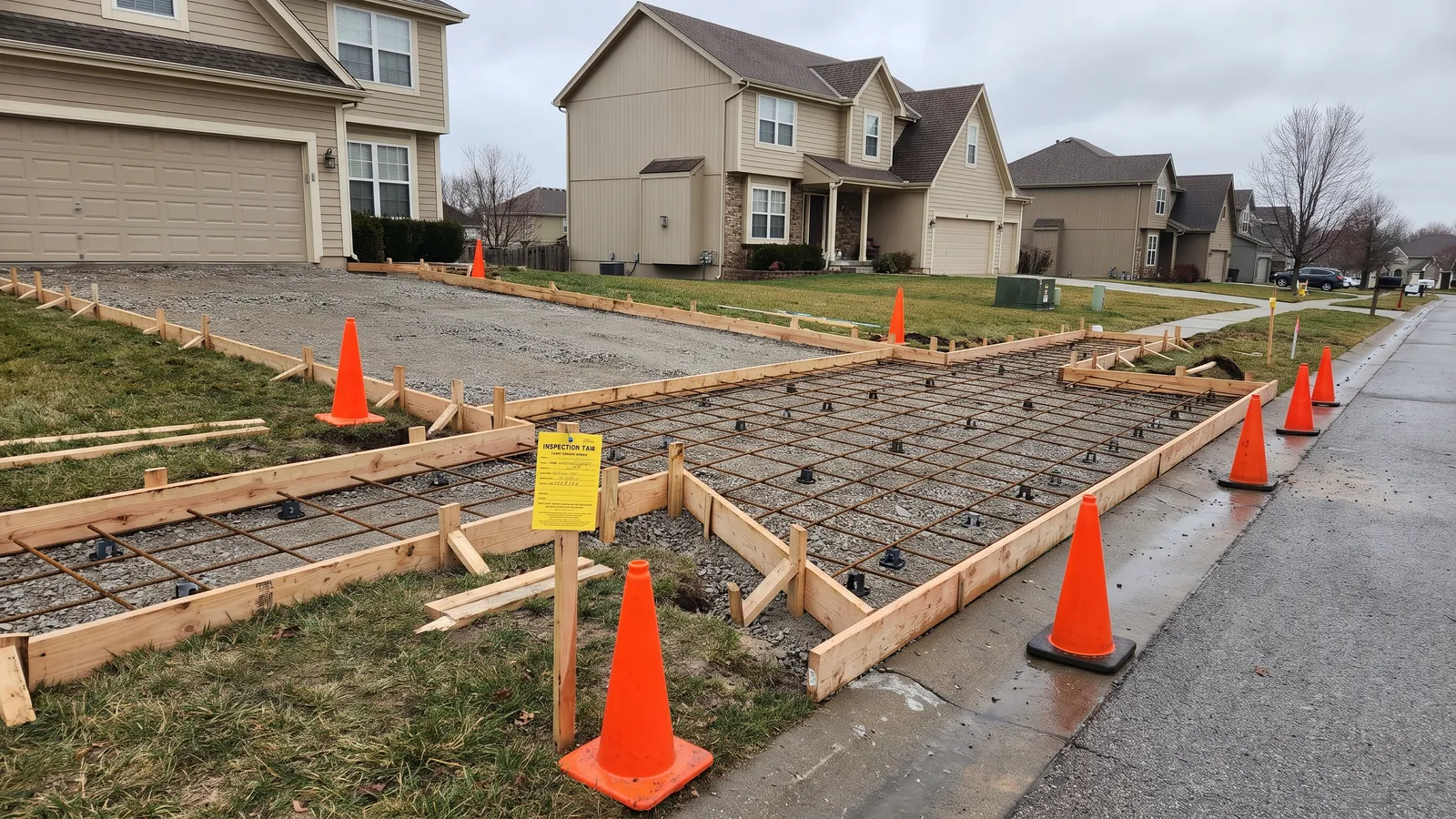
- Pre-pour, 48 hours' noticeThe City inspects every drive approach and sidewalk before placement; tickets emailed within 24 hours
- First winter
- No chloride deicersSand for traction; sealed in late summer before the first freeze
Every estimate lists the mix, base depth, thickness, reinforcement and joint spacing in writing.
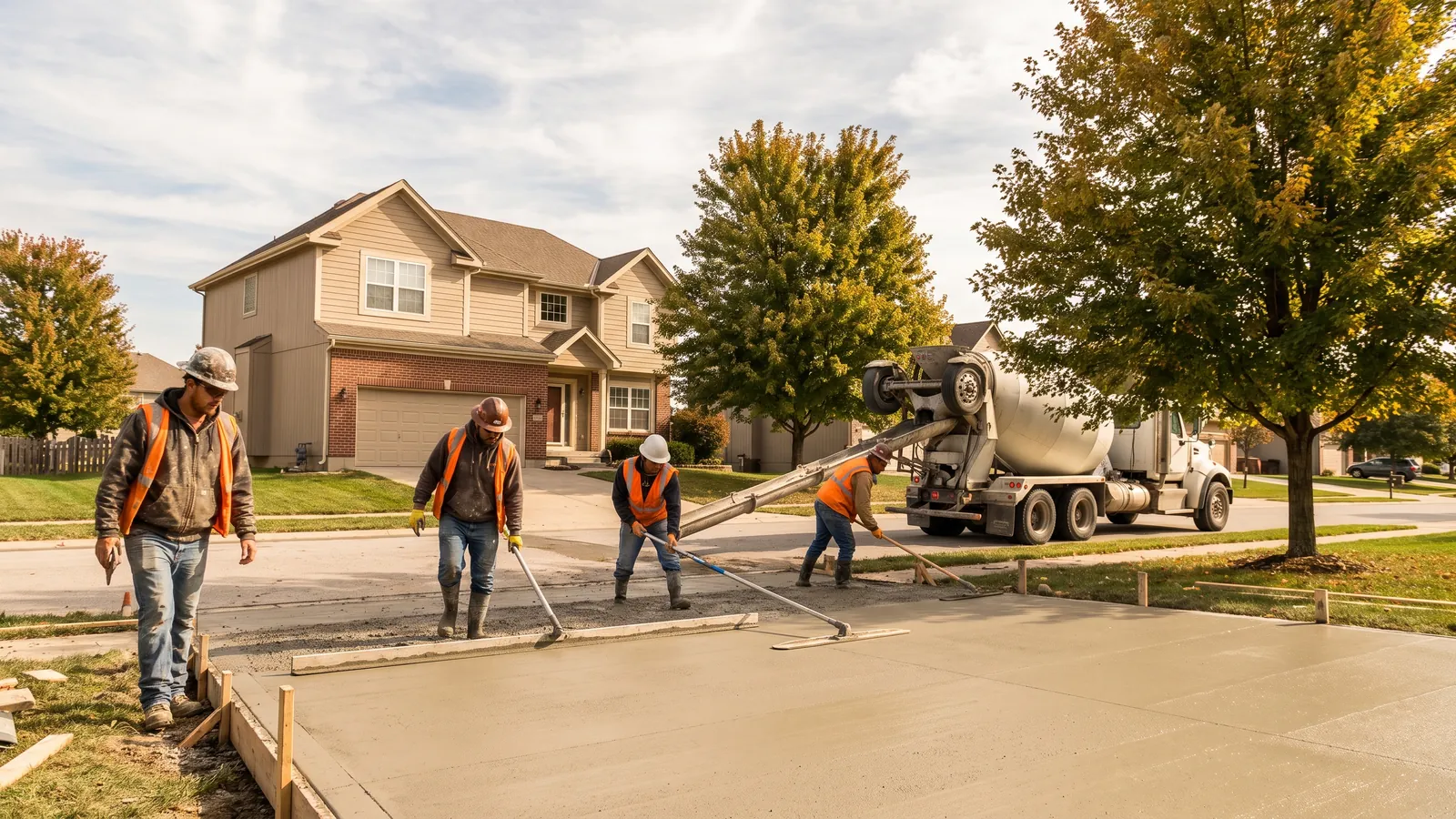
Concrete for a city of 150,000 that is still pouring new driveways and replacing its first ones
Concrete driveways
New, replaced and widened drives with air-entrained concrete on a compacted base, jointed so the cracks land where we put them.
Driveways & pricing →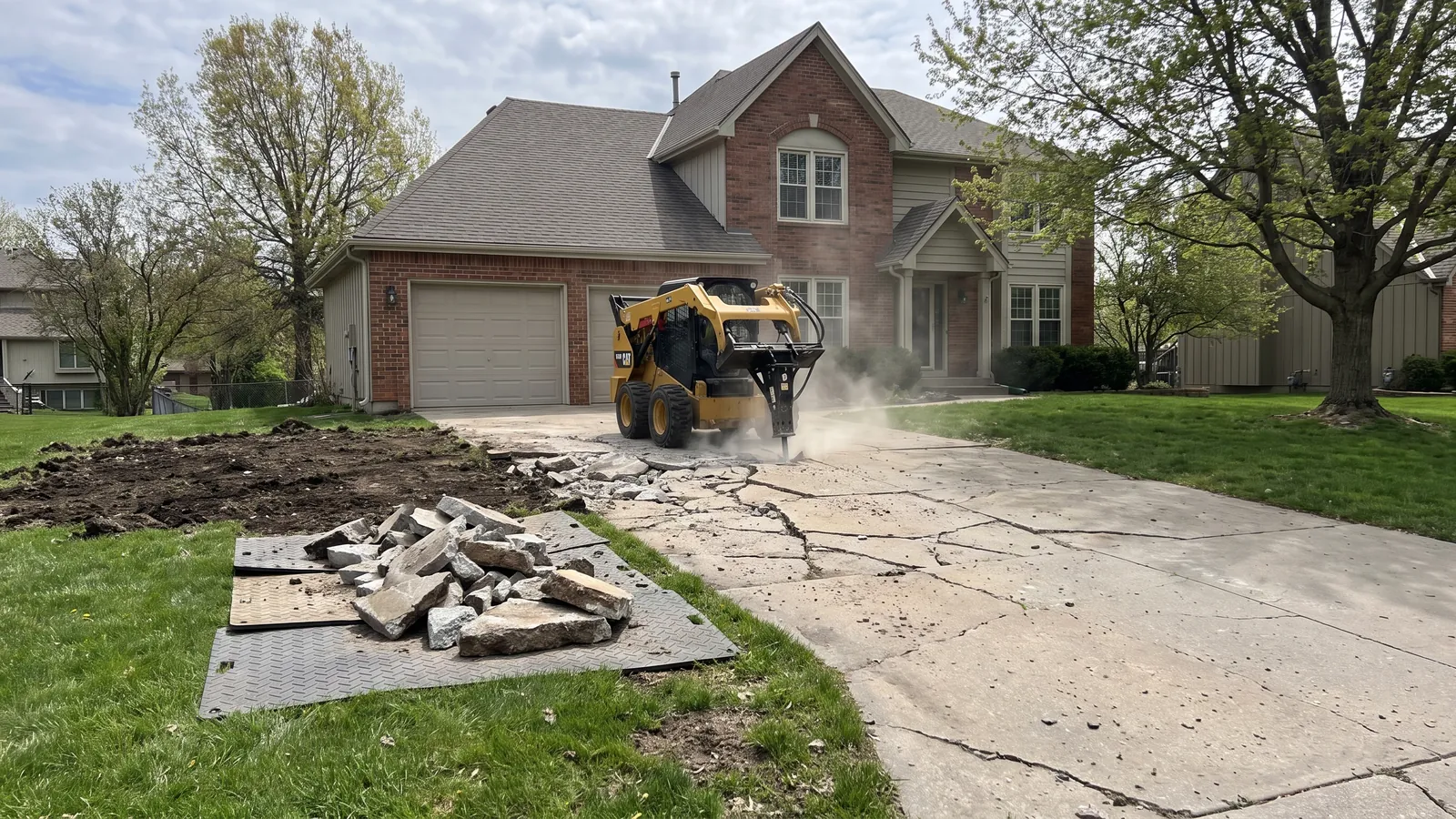
Driveway replacement
The 1990s and 2000s driveway, broken out and repoured with the base, the air and the joints it never had, and the garage settlement fixed.
Replacement →Approaches, curb cuts & sidewalks
The concrete between your drive and the street is City right-of-way. We pull the permit, call the inspection and pour to the City's spec.
Right-of-way work →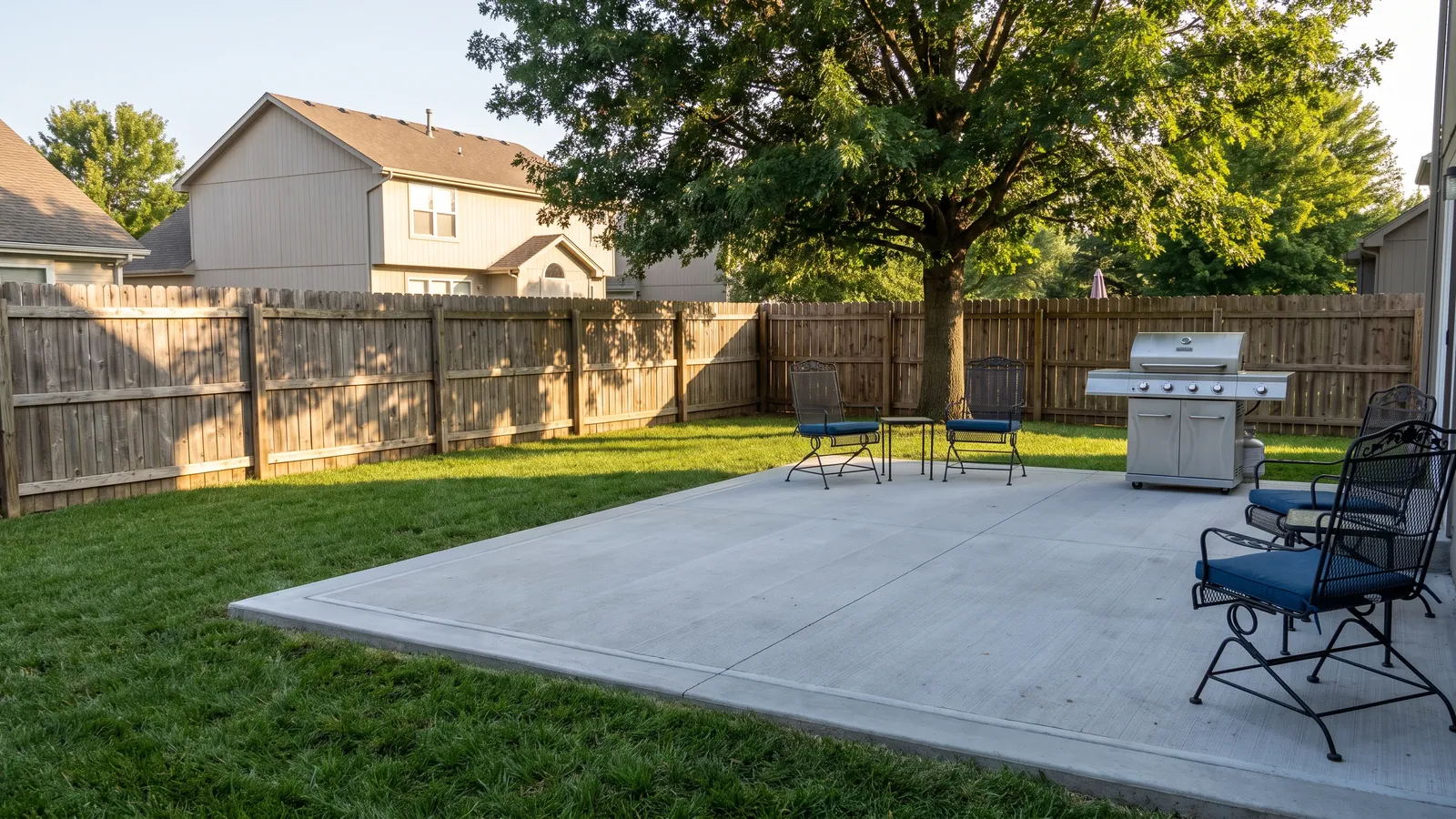
Concrete patios
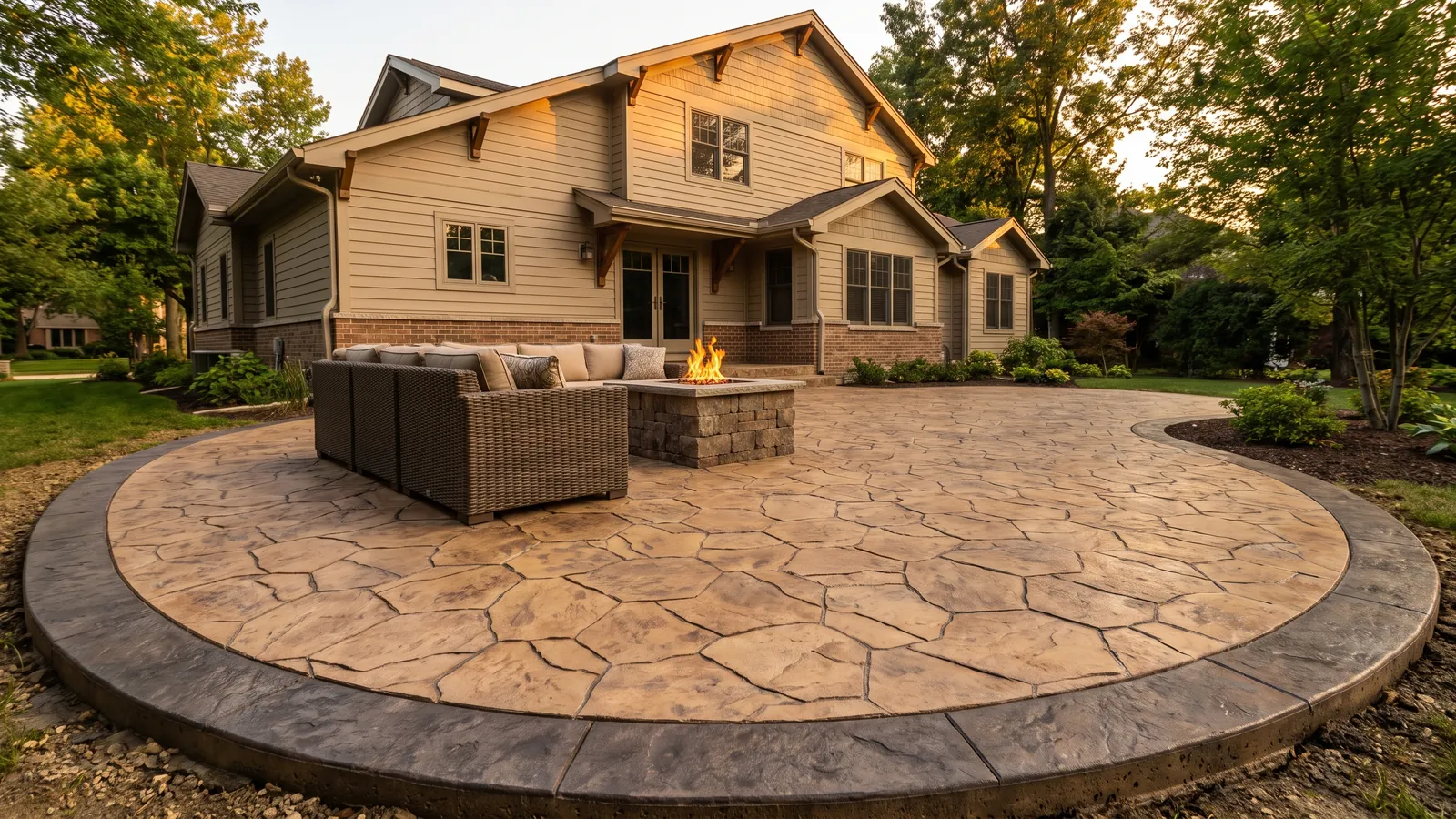
Broom, bordered or stamped, sloped away from the house, with footings ready for the pergola or cover.
Patios →Stamped & decorative
Flagstone, ashlar slate and wood plank with integral color and a breathable sealer that stands up to a Kansas winter.
Stamped →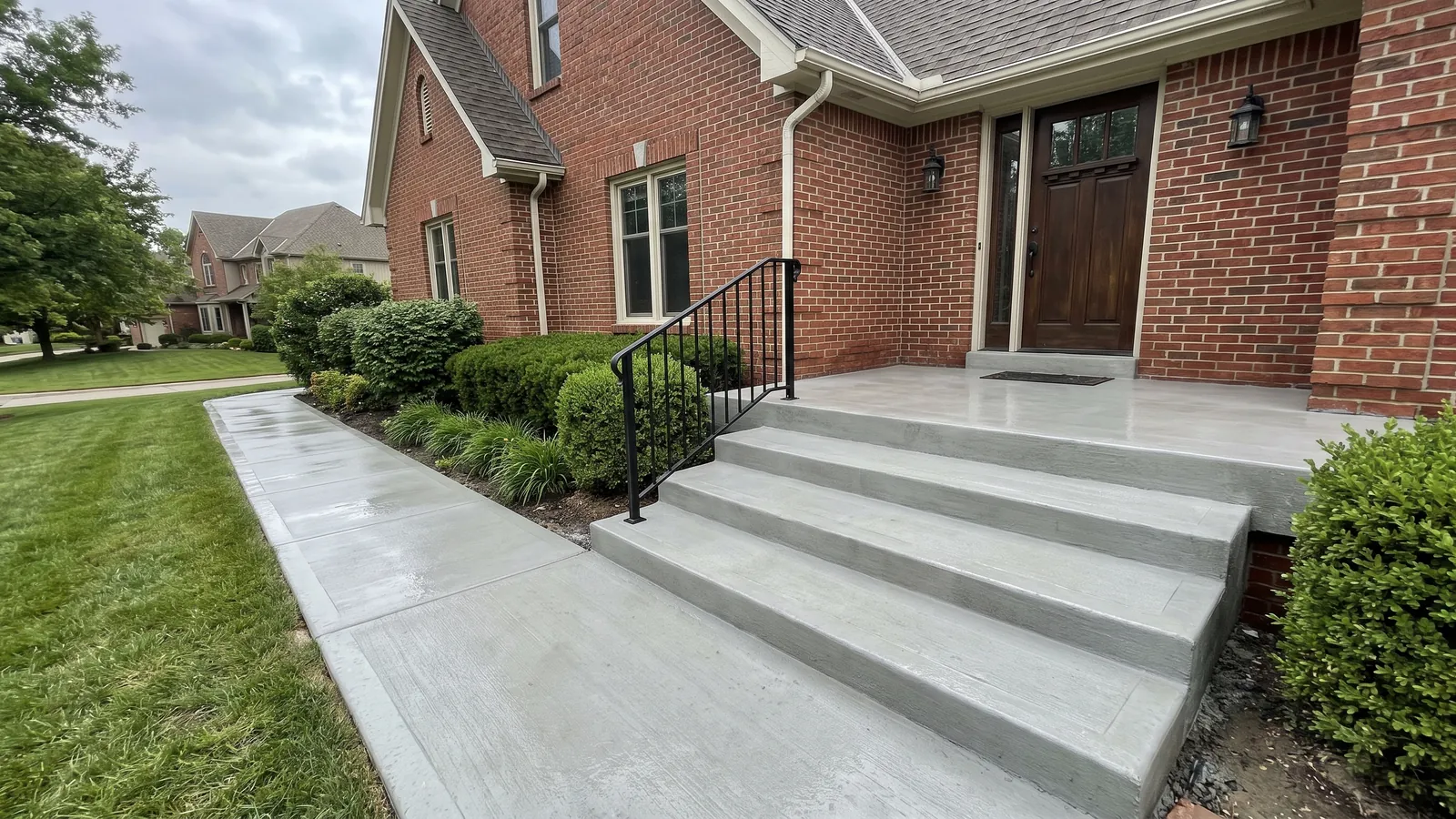
Steps, stoops & walkways
Stoops on footings below the frost line so they stop heaving into the door, steps with even risers, walks that drain.
Steps →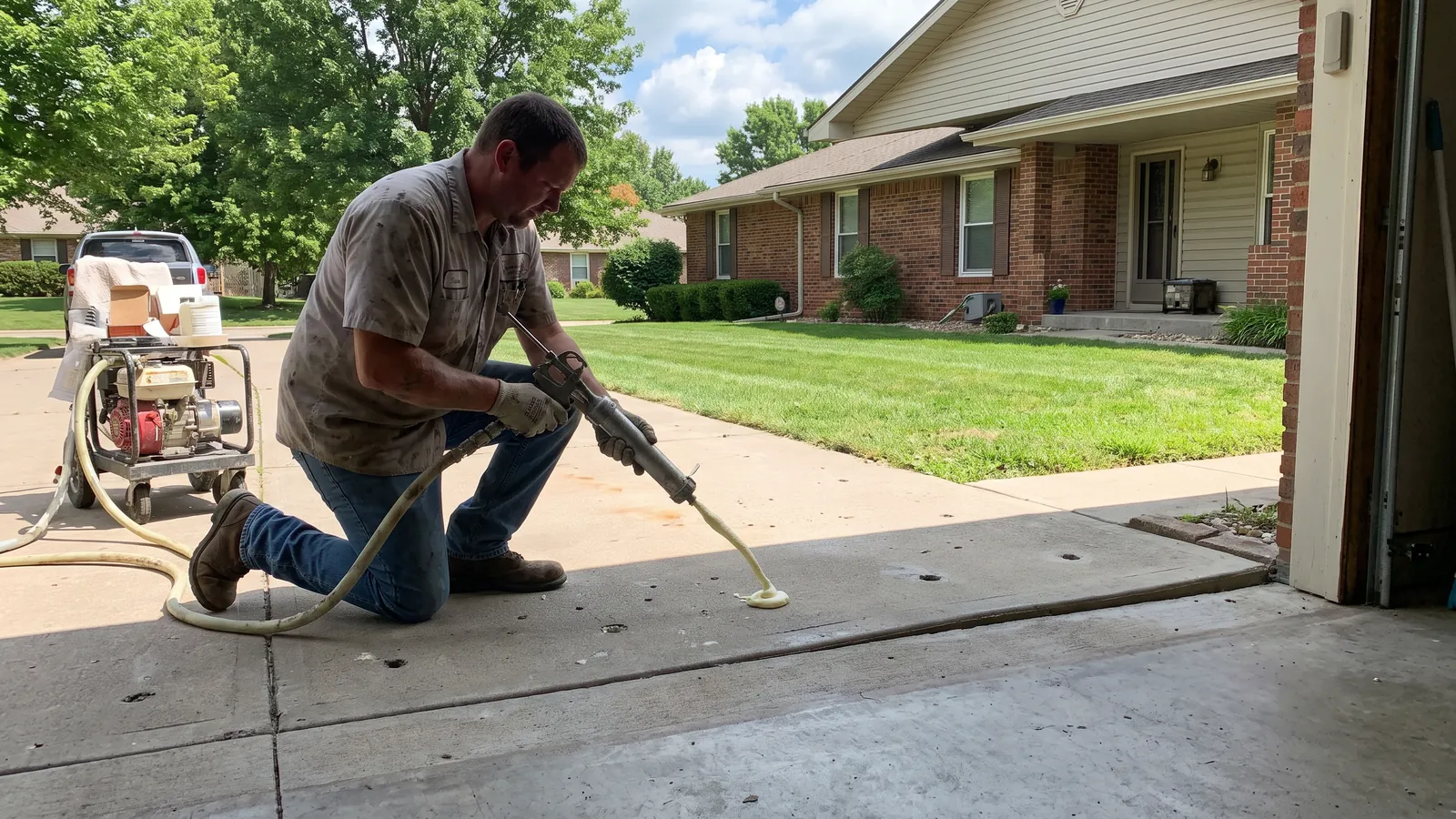
Mudjacking & polyjacking
Sunken garage aprons, walks and patio slabs lifted back to grade in a morning, for a fraction of replacement.
Leveling →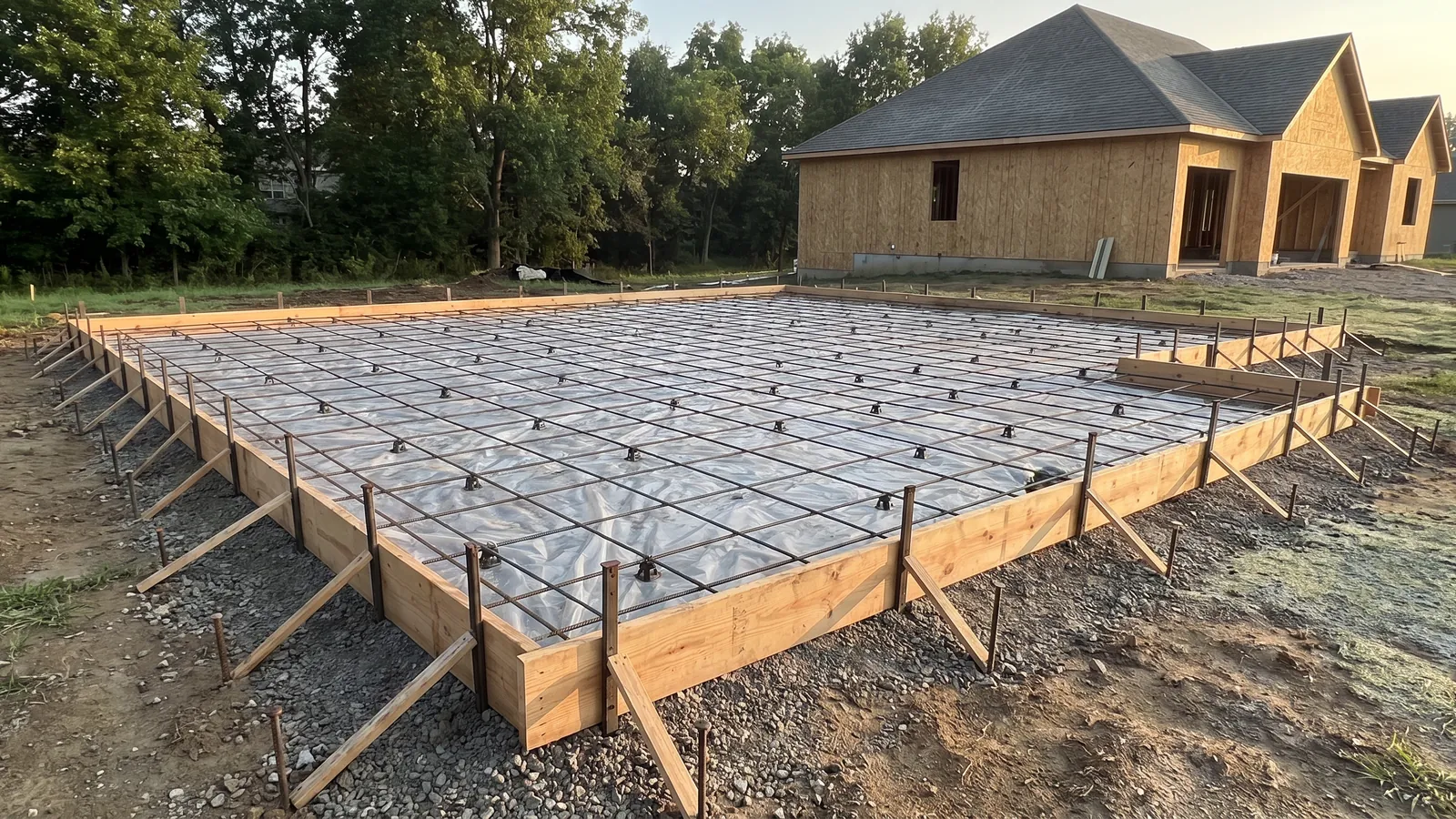
Garage, shop & RV slabs
Turned-down edges for small sheds, footings below 36 inches of frost for a detached garage, six-inch pads for the camper.
Slabs →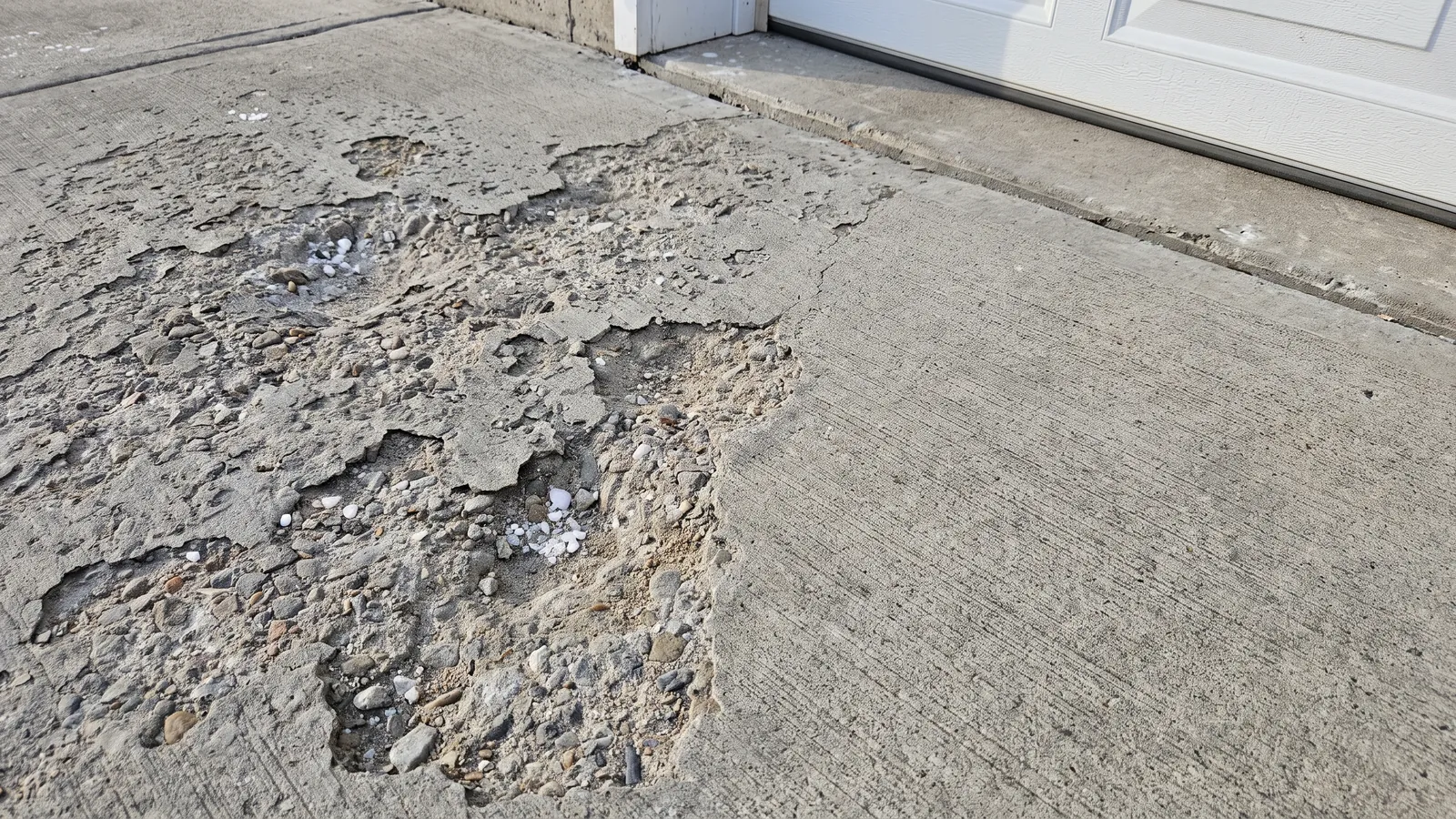
Repair & sealing
Crack and joint repair, resurfacing where the top is scaled, and the sealer that keeps salt out before the first winter.
Repair →Four numbers that decide how long concrete lasts in Olathe
Johnson County is prairie on clay: hot, wet summers, cold winters that freeze and thaw a few times a week, and a soil that moves with every one of them. None of it is hard on concrete one day at a time. All of it together, year after year, is.
Three offices can have a say in an Olathe concrete job
The right-of-way permit
Anything between your property line and the street, which on most lots means the driveway approach, the curb cut and the public sidewalk, needs an approved City of Olathe right-of-way permit before work starts: $50 per adjacent parcel, up to 7 working days to review, a $5,000 bond when curb or street cuts are involved, a pre-pour inspection requested 48 hours ahead, concrete tickets emailed within 24 hours, and a one-year guarantee on the work. The UDO also says driveway entrances in the right-of-way must be concrete.
No license class for concrete
Johnson County's contractor licensing program issues eleven license types, from General (A) to Wood Framing (DW), and none of them covers concrete flatwork. A driveway or patio contractor is not required to hold a County license, which is why the certificate of insurance and the City permit are what to ask for. Foundation work is different: Olathe wants a sealed Kansas engineer's letter and final report.
The architectural committee
Most of the subdivisions built in Olathe since the 1990s have an HOA, and most HOAs want to approve a widened driveway, a new parking strip, a stamped color or a patio cover before it is poured. Many also have rules about where a trailer or camper can sit. We send the drawing and the finish sample and wait for the letter.
Four calls we get every week
Scaled surfaces
The top eighth of an inch flakes off in patches, worst at the garage and the approach where salt drips off the car. It starts with a mix short on air, a finish worked while bleed water was on top, or salt in the first winter.
Why it happens →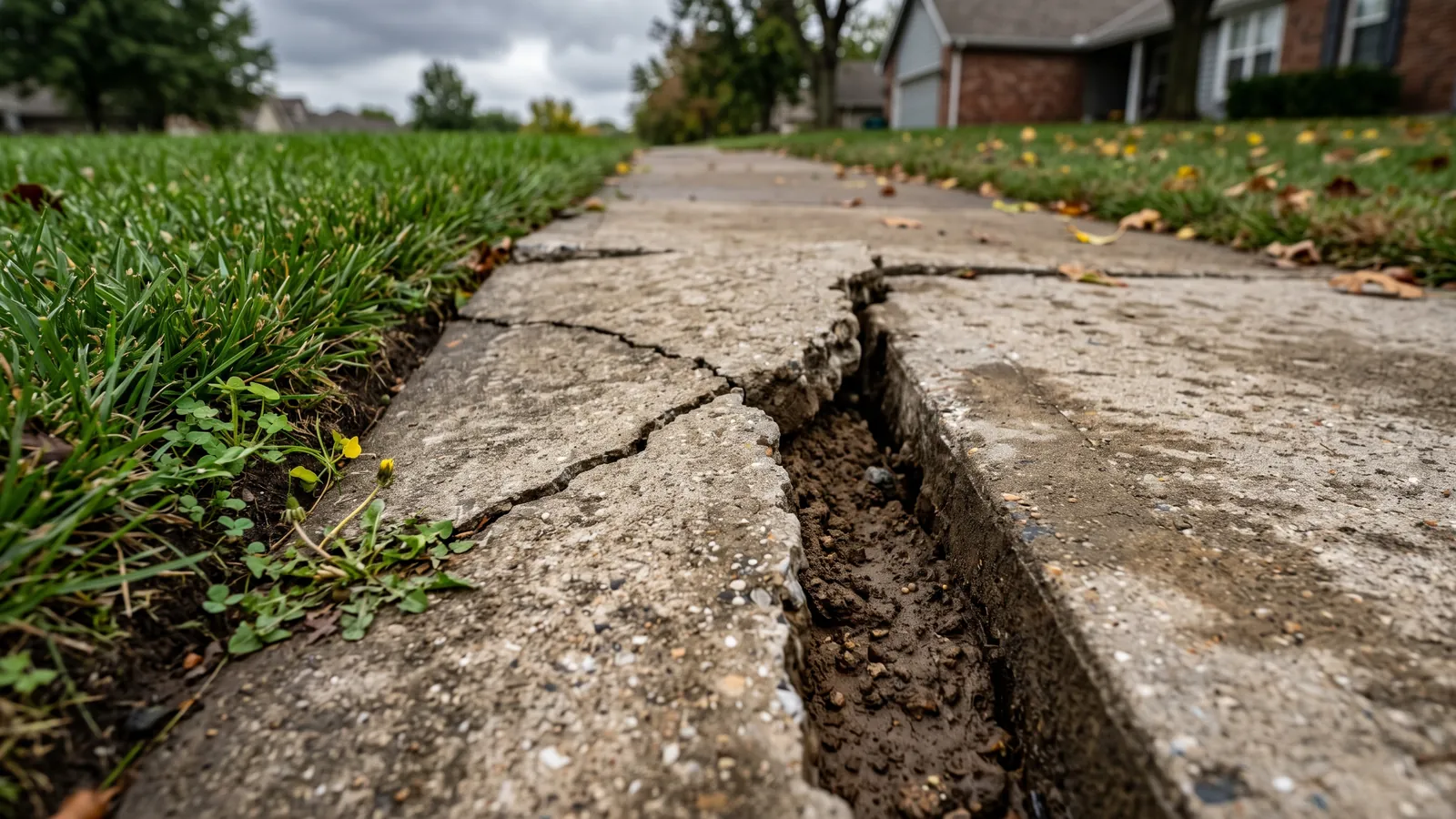
Heaved and tipped panels
A wet spring swells the clay and lifts a panel; a dry August shrinks it and drops the next one. Walks and stoops near downspouts and sprinkler heads move the most.
Clay and cracks →Sunken garage aprons
Backfill along the foundation keeps settling for years, and the downspout helps it along. A sound slab can usually be lifted with foam rather than replaced.
Leveling →Approaches and sidewalk panels
A broken approach or a lifted public sidewalk panel is a permit, an inspection and a pour to the City's spec. We handle the paperwork and the concrete.
Right-of-way →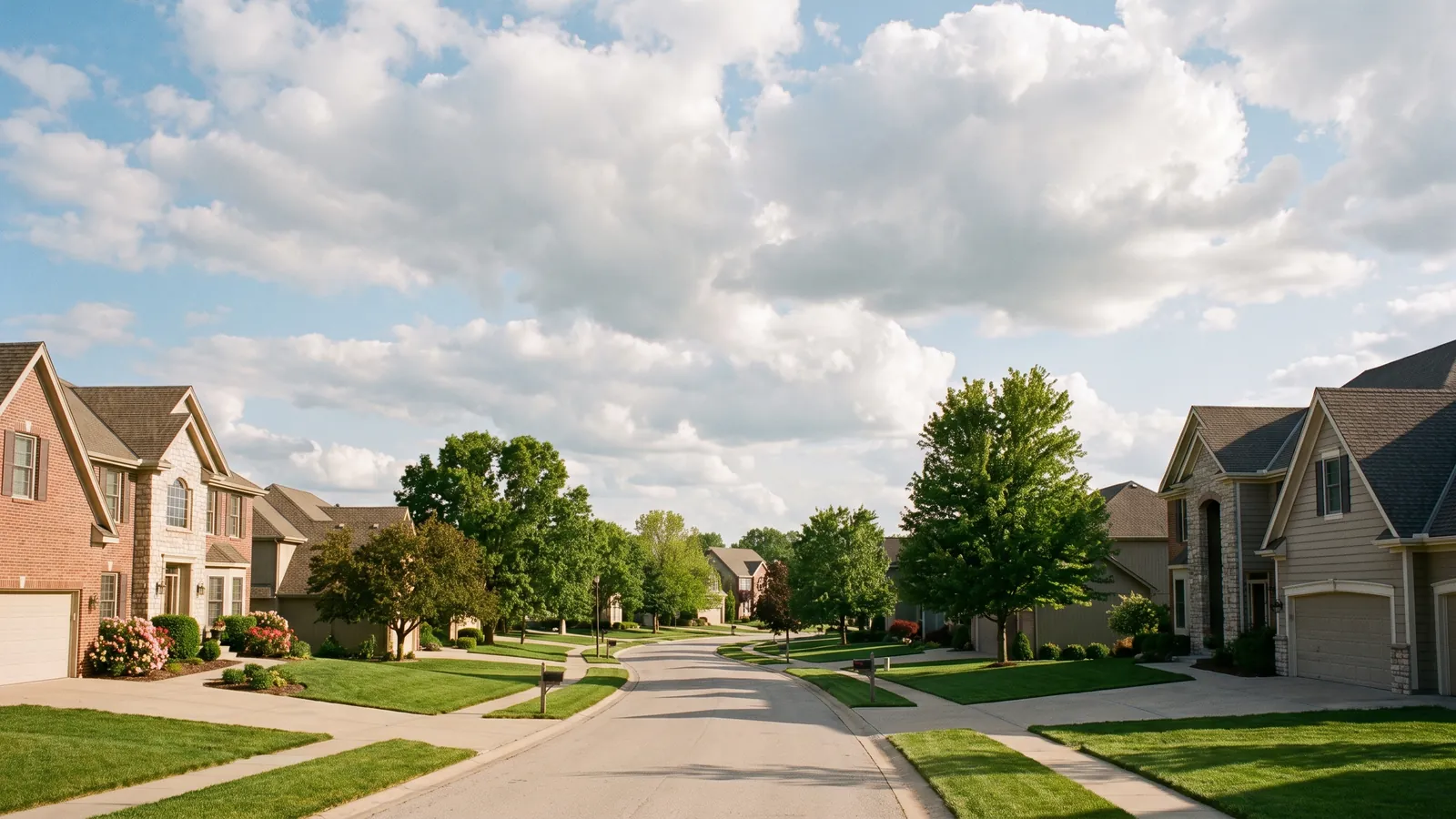
Olathe added 100,000 people in thirty years. The concrete from the first half of that run is coming due.
Olathe had about 63,000 people in 1990 and 150,025 by the Census Bureau's July 2025 estimate, up 6.2 percent since 2020 alone. It is the fourth-largest city in Kansas and the county seat of Johnson County, with three out of four homes owner-occupied and a median home value of $364,700. The subdivisions that filled in along 151st Street, Black Bob Road, Ridgeview and College Boulevard in the 1990s and 2000s were poured by production crews a driveway a day, and those driveways, walks and stoops are now 20 to 30 years into a climate that gives them no breaks.
That means a lot of the same failures on the same streets: scaled surfaces at the garage, heaved sidewalk panels over the clay, stoops that have pulled away from the house, and approaches the City would like replaced. It also means a city with a written right-of-way process, an HOA on most streets, and a County license program that has no class for the trade, so the burden of checking a contractor falls on the homeowner.
We work across all of it, from the old grid around Santa Fe Street and Kansas Avenue to the newest streets south of 175th, and out to Overland Park, Lenexa, Shawnee, Gardner, Spring Hill, Leawood, De Soto, Prairie Village and Mission.
Where we work →Four steps, no surprises
Call or send the form
A cracked driveway, a stoop pulling away from the door, a sidewalk letter from the City, a garage that needs a slab. Tell us what you see. We answer around the clock.
An estimator measures
Usually within a day or two. We measure, probe the clay and the base, check the plat for easements, and work out whether the job reaches the City right-of-way or needs the HOA's letter.
Written, itemized price
Removal, base, mix, thickness, reinforcement, finish, joints, sealer and any permit, each on its own line and good for 30 days. No deposit until you approve and we schedule.
Poured for the forecast
Early starts in July, blankets and a heated mix in the shoulder seasons, and a pour date moved if a hard freeze or a thunderstorm is coming. Joints cut the same day, no salt that first winter.
All of Olathe, and Johnson County around it
We are in Olathe every week: the original grid downtown, the 1970s and 80s streets off Santa Fe and Ridgeview, the 1990s and 2000s subdivisions between 119th and 159th, and the newest streets south of 175th and out toward Cedar Creek and Prairie Center.
Outside the city we cover Overland Park, Lenexa, Shawnee, Gardner and Edgerton, Spring Hill, Leawood, De Soto, Prairie Village and Mission. Each city has its own right-of-way rules and its own permit desk, and a couple have their own contractor registration, so we check whose approval your job needs before we quote it.
See the full service area →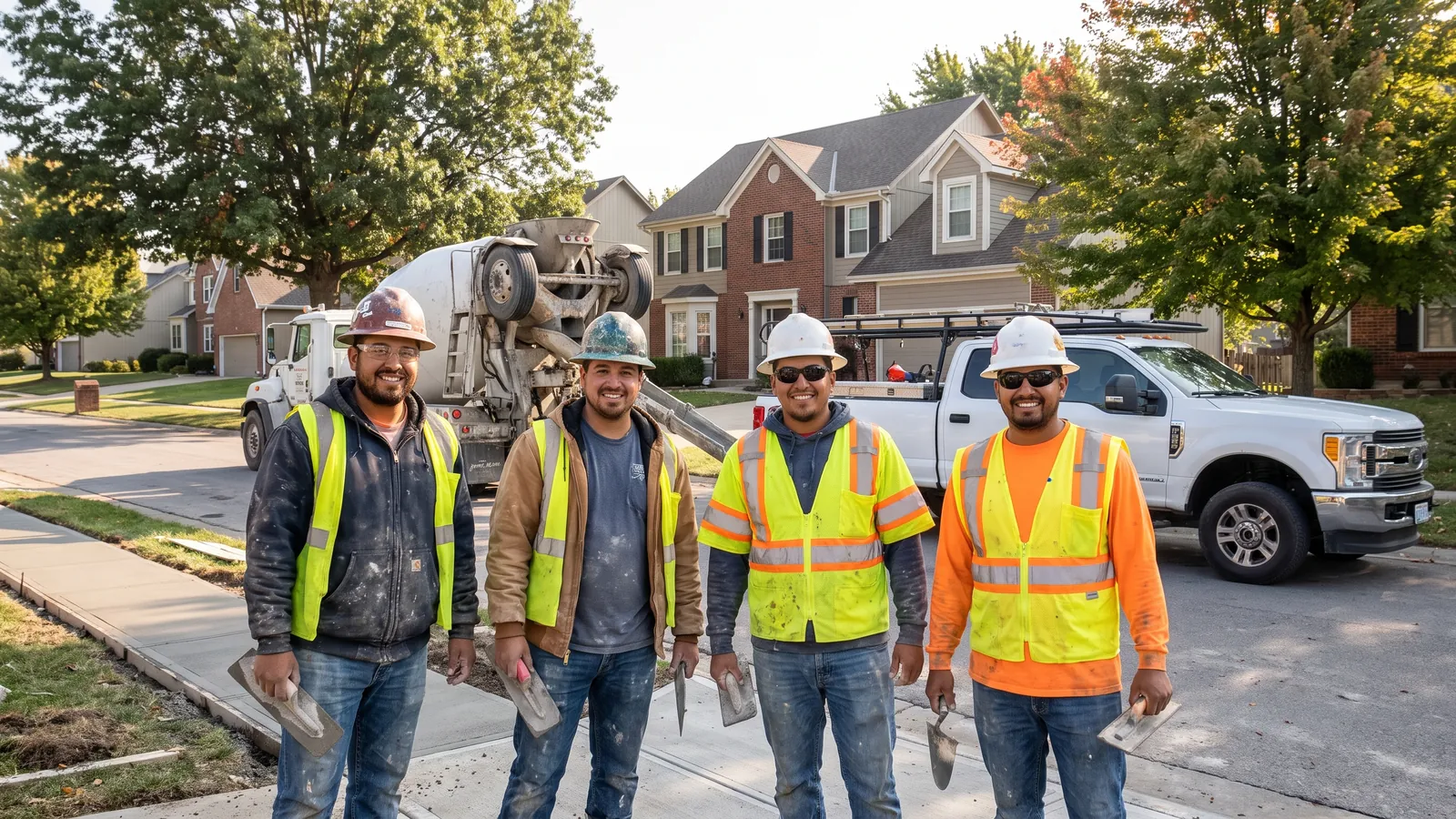
Questions Olathe homeowners ask us
How much does a concrete driveway cost in Olathe?
For 2026 budgeting, a reinforced broom-finish driveway in Olathe and Johnson County runs about $8 to $12 per square foot installed on a compacted base. A typical two-car driveway of 24 by 40 feet (960 square feet) comes to roughly $7,700 to $11,500, plus $1.50 to $2.50 a square foot to break out and haul the old one. The driveway approach between the sidewalk and the street is City of Olathe right-of-way: it needs the City's $50-per-parcel right-of-way permit and a pre-pour inspection, and we price it as its own line. Your real price is a written, itemized estimate after we have measured and probed the ground.
Do I need a permit to pour a driveway or patio in Olathe?
For the slab on your own lot, the City's residential permit page does not list driveways, patios or flatwork, and we confirm with Building Codes for anything unusual. The part that always needs a permit is the right-of-way: the driveway approach, a curb cut and the public sidewalk. The City's Right-of-Way Permit Manual requires an approved permit before any work starts there, $50 per adjacent parcel, doubled if work begins without one, a pre-placement inspection requested 48 hours ahead, and concrete tickets emailed within 24 hours of the pour. We pull it. See the permit guide.
Why does concrete crack and heave so much here?
Two things: the ground and the winter. Johnson County sits on clay that swells when it is wet and shrinks when it dries, and the Kansas Geological Survey calls expansive soils a more widespread problem in Kansas than landslides, one that heaves and cracks foundations, driveways and sidewalks season after season. Then it freezes: Olathe winters cycle through freezing and thawing dozens of times, and road salt tracked off the car finishes the surface. Concrete that lasts here is air-entrained (6 to 7 percent), about 4,000 psi, placed on a compacted base with drainage away from it, jointed properly and kept away from chloride deicers its first winter.
Can you lift a sunken slab instead of replacing it?
Usually, if the concrete is sound. Polyjacking pumps expanding polyurethane foam under the slab through dime-sized holes and lifts it back to grade in a morning; you can drive on it the same day. Mudjacking does the same with a cement slurry at a lower price and a heavier fill. A slab that is broken into pieces, scaled to the stone or heaved by roots is better replaced, and we tell you which one you have. See mudjacking vs. polyjacking.
Are you licensed?
Kansas has no statewide contractor license, and Johnson County's contractor licensing program issues no class for concrete flatwork; concrete contractors are not required to hold a County license. What matters is insurance and the permit. The crews that work through us carry general liability and workers' compensation, and any work in the City right-of-way is done under the City's permit with the City's inspection. Ask any contractor for the certificate of insurance before the truck comes.
Do you really answer at night?
Yes, 24 hours a day, every day. Your call is answered and your details taken at any hour, and an estimator calls back the next business morning, usually with an on-site visit the same week. If a slab has dropped at the garage door or the City has flagged your sidewalk, say so and we will move you up.