Sealing before the first winter, and finishes that go beyond gray
The cheapest thing you can do for a slab in Olathe is seal it in late summer before the salt comes. The most visible is to give it a color, a border or a texture. We do both, with products chosen for freeze-thaw, not for the first-summer shine.
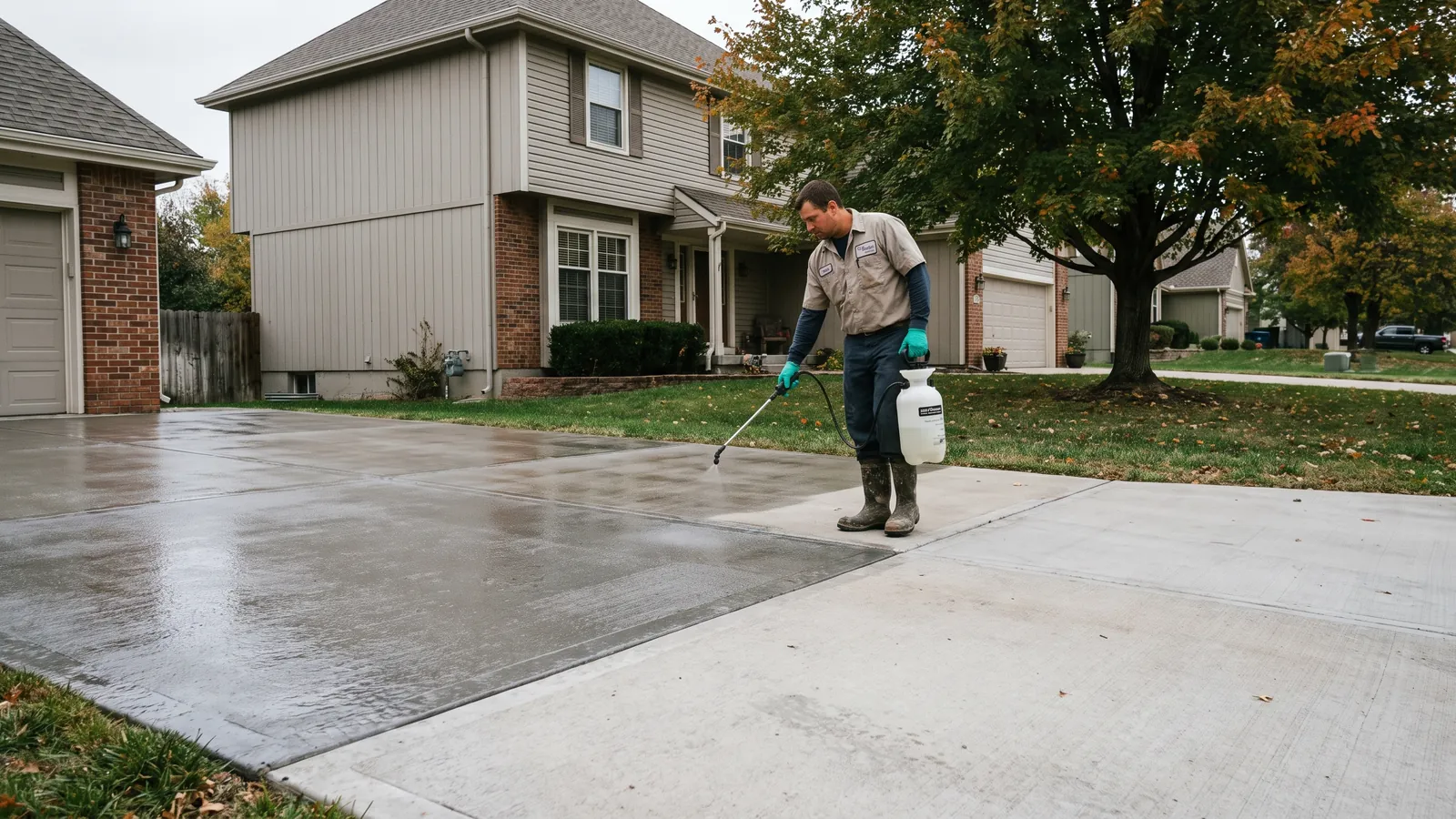
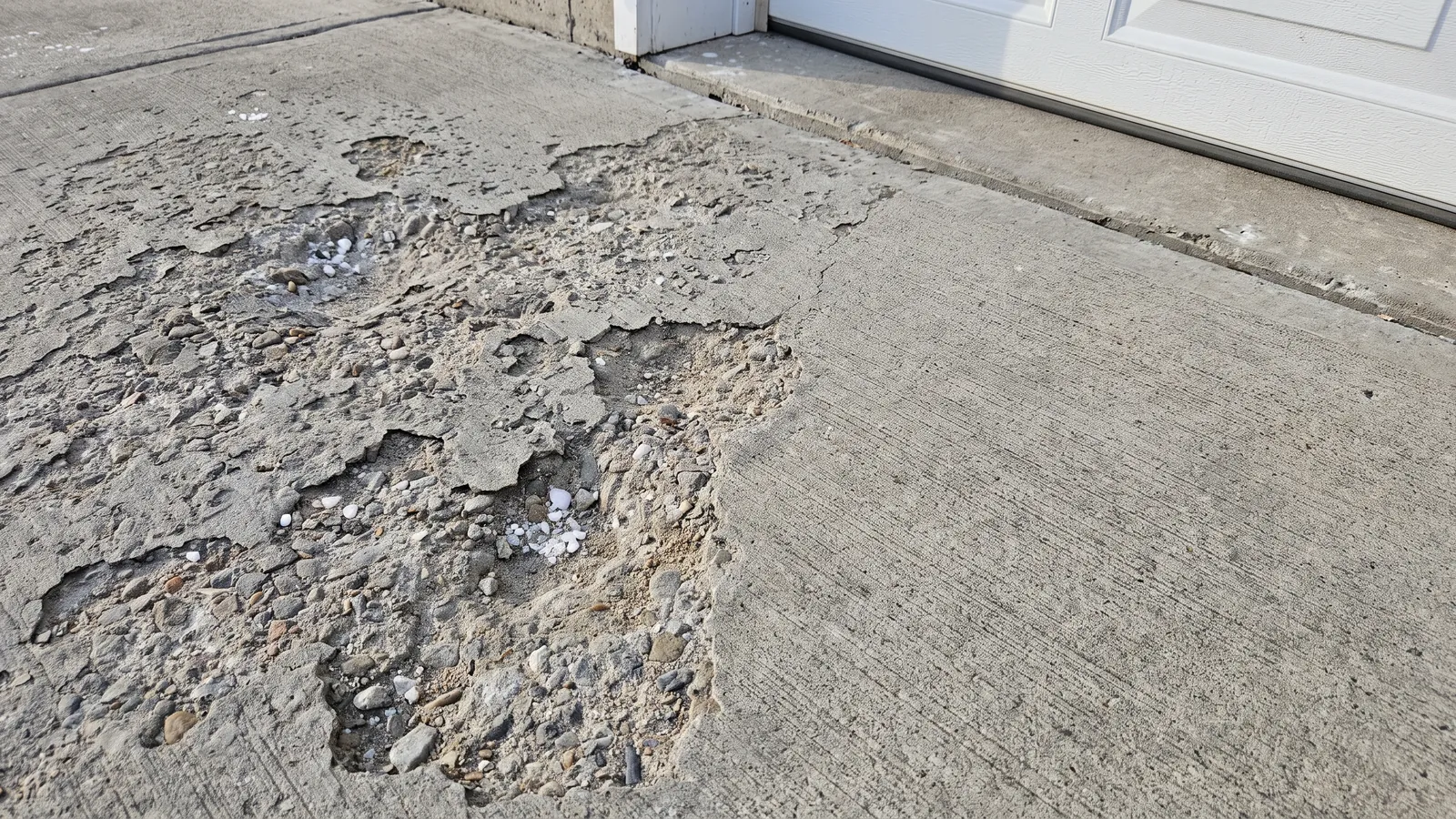
Concrete is porous. Water gets into the top layer, freezes there, and over a few dozen cycles a winter pushes the paste off the surface; road salt makes it worse by keeping the surface wet below freezing and by crystallizing in the pores. A penetrating sealer, a silane or siloxane that soaks into the concrete and reacts with it, keeps most of that water out without forming a film on top. It doesn't change the look, it doesn't get slippery, and it doesn't peel. The ready-mix industry's own guidance on scaling recommends exactly that, applied in late summer so the slab is dry and warm and has the winter ahead of it. We seal every new slab we pour once it has cured, and we reseal older driveways, walks and patios that were never done, usually in August and September.
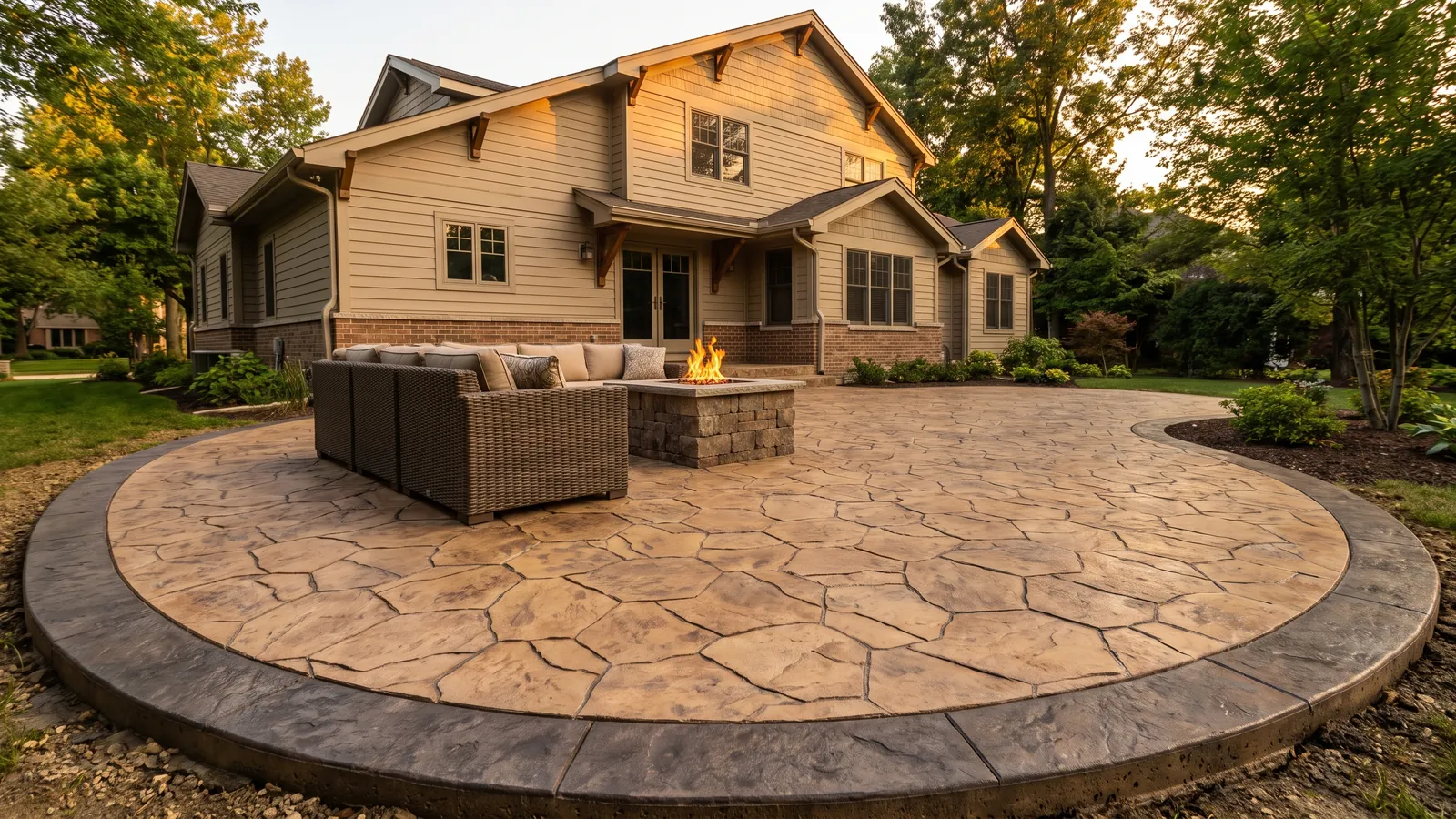
Decorative work is the other side of the same products. Integral color goes in the truck so the whole slab is colored, not just a coating. Acid and water-based stains give an existing gray slab a mottled stone look. Exposed aggregate, where the top paste is washed off to show the river rock in the mix, makes a walk or a pool deck that grips wet and hides the salt. Borders, bands and stamped patterns dress up a plain broom field. On all of them the sealer is the part that makes or breaks the job in this climate: stamped and stained surfaces need a sealer that breathes so moisture doesn't turn it white, with a non-slip grit where people walk, and a reseal every two to three years.
What we won't sell you is a glossy film sealer on a driveway. It looks good in July, it's slick in December, and it traps the water the slab needs to let out. If you want shine on a patio, there are breathable products that give some; we'll show you both on a sample.
What's included
Penetrating sealer
Silane or siloxane that soaks in and reacts, keeps water and salt out, doesn't peel or get slippery, applied to a clean, dry slab in late summer.
Resealing older concrete
Driveways, walks and patios cleaned, repaired where needed and sealed, usually August through October.
Stamped and colored resealed
A breathable sealer with a non-slip additive on stamped and stained work, every two to three years.
Integral color and stains
Color in the mix for new pours; acid and water-based stains on existing slabs.
Exposed aggregate
Washed river-rock finish for walks, patios and pool decks that grip wet and hide wear.
Borders and bands
Smooth-troweled, colored or stamped borders that frame a broom-finish driveway or patio.
Sealing and decorative finish costs in Olathe, KS
| Job | Typical price | Notes |
|---|---|---|
| Penetrating sealer, driveway or patio | $0.90 – $1.60 per sq ft | Clean and seal; 960 sq ft driveway ≈ $900–$1,500 |
| Clean and reseal stamped or stained concrete | $1.50 – $3 per sq ft | Every two to three years |
| Acid or water-based stain on an existing slab | $4 – $9 per sq ft | Includes prep and sealer |
| Exposed aggregate, new pour | $11 – $16 per sq ft | Washed finish |
| Integral color, new pour | + $1.50 – $3 per sq ft | Depends on pigment |
| Stamped or colored border on a broom slab | $20 – $35 per linear ft | See stamped |
These are 2026 Johnson County ranges to help you budget. Your written price is itemized (removal, base, mix, thickness, reinforcement, finish, joints, sealer and any permit) and good for 30 days.
Recent work
Questions we get about sealing and decorative finishes
Does concrete really need to be sealed?
Here, yes. A penetrating sealer is the single cheapest thing that extends the life of a slab exposed to freeze-thaw and road salt. New concrete should be sealed once it has cured and before its first winter; older concrete that was never sealed benefits too.
When should it be sealed?
Late summer, when the slab is dry and warm, so the sealer penetrates and the slab goes into winter protected. We do most sealing in August and September.
How often?
A penetrating sealer on a driveway every three to five years; a breathable sealer on stamped or stained concrete every two to three.
Will sealer make it slippery?
A penetrating sealer won't. A film-forming sealer can, which is why we add a non-slip grit on walks and steps or use a penetrating product.
Can you color my existing gray patio?
Yes, with a stain. The result is mottled and natural rather than uniform, and we do a sample patch first.