Concrete repair and resurfacing that fixes the cause, not just the crack
A crack is a symptom. Before we fill one we want to know whether the slab is still moving, whether water is getting under it, and whether the top is scaling. Then the repair we do is the one that will still be there in five winters.
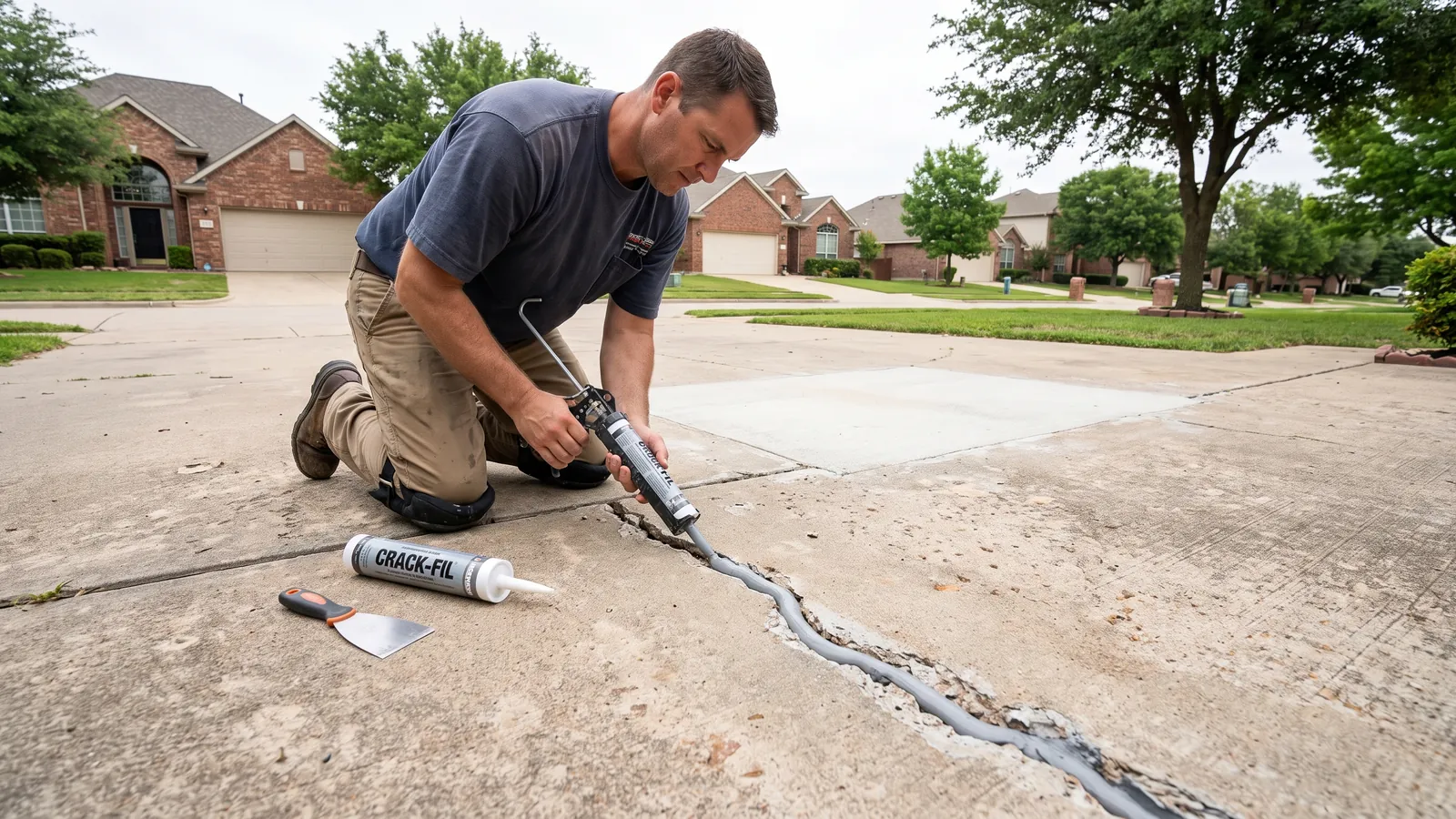
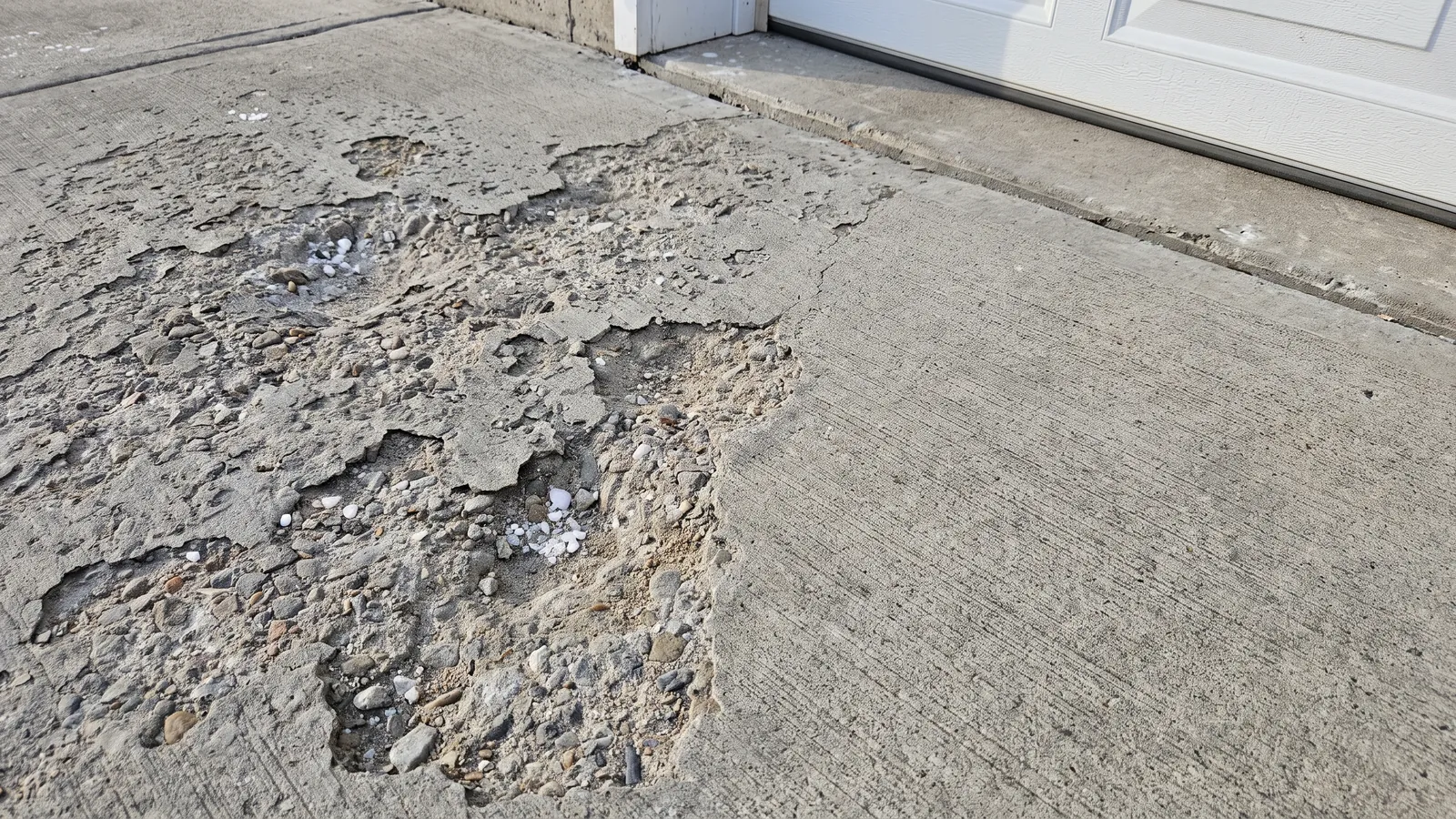
Repairs fall into three groups here. Cracks and joints. A crack that has stopped moving can be routed, cleaned and filled with a flexible polyurethane sealant that keeps water and salt out of it, which is what stops a hairline crack from becoming a two-piece slab. Control joints that have lost their caulk get the same treatment, and that matters more than it looks: an open joint lets water under the slab, the clay swells, and the panel next to it lifts. Spalls and edges. Where the surface has popped or an edge has broken at a joint, we cut back to sound concrete, prime, and patch with a polymer-modified repair mortar that bonds and cures hard enough to drive on. Scaled surfaces. When the top eighth of an inch has flaked off from salt and freeze-thaw but the slab underneath is sound and flat, a bonded overlay, a half-inch or so of polymer-modified topping, broom-finished and sealed, gives you a new surface without the cost of replacement. We're honest about its limits: it won't fix a slab that's still moving, and it needs the same first-winter care new concrete does.
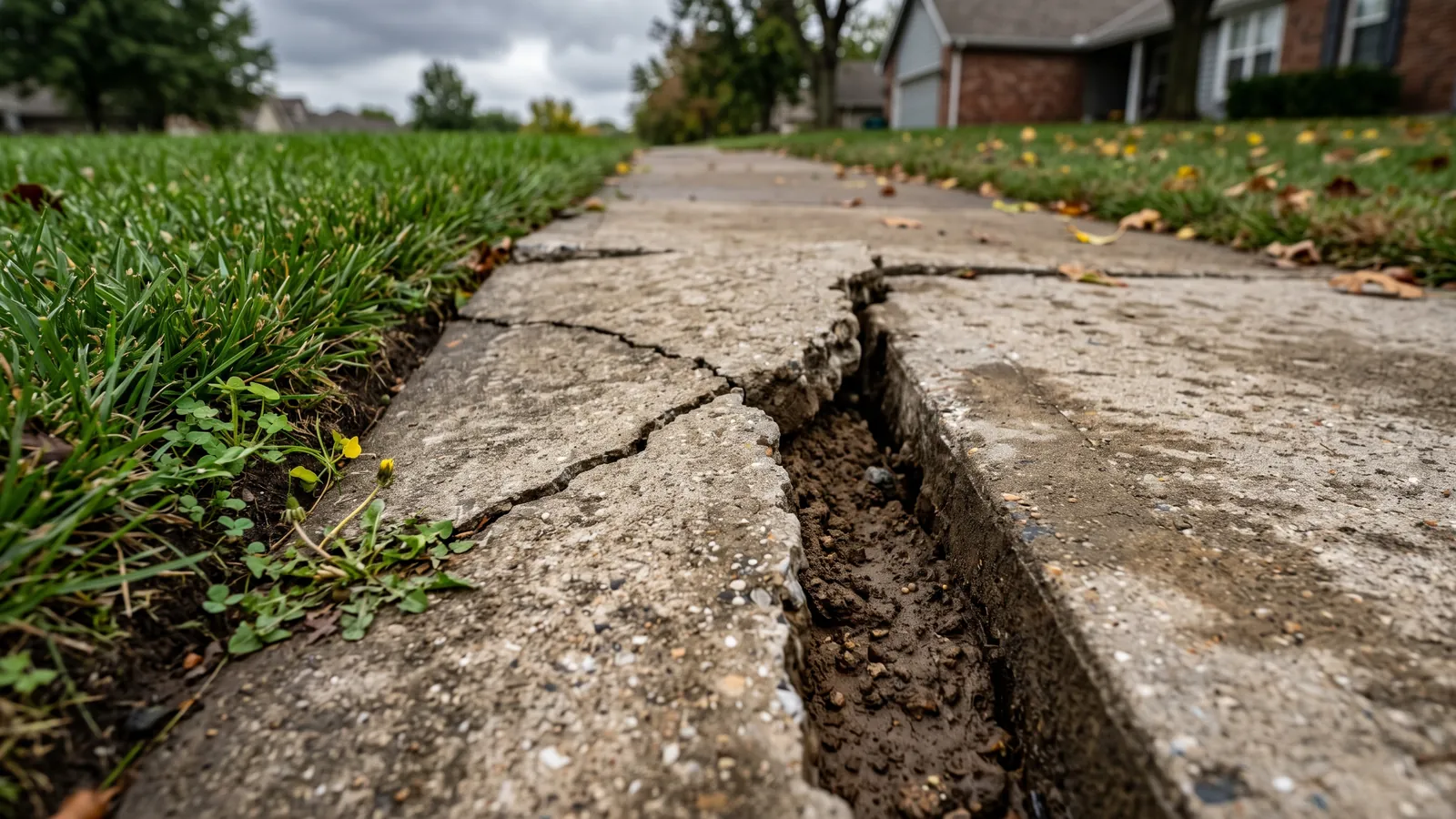
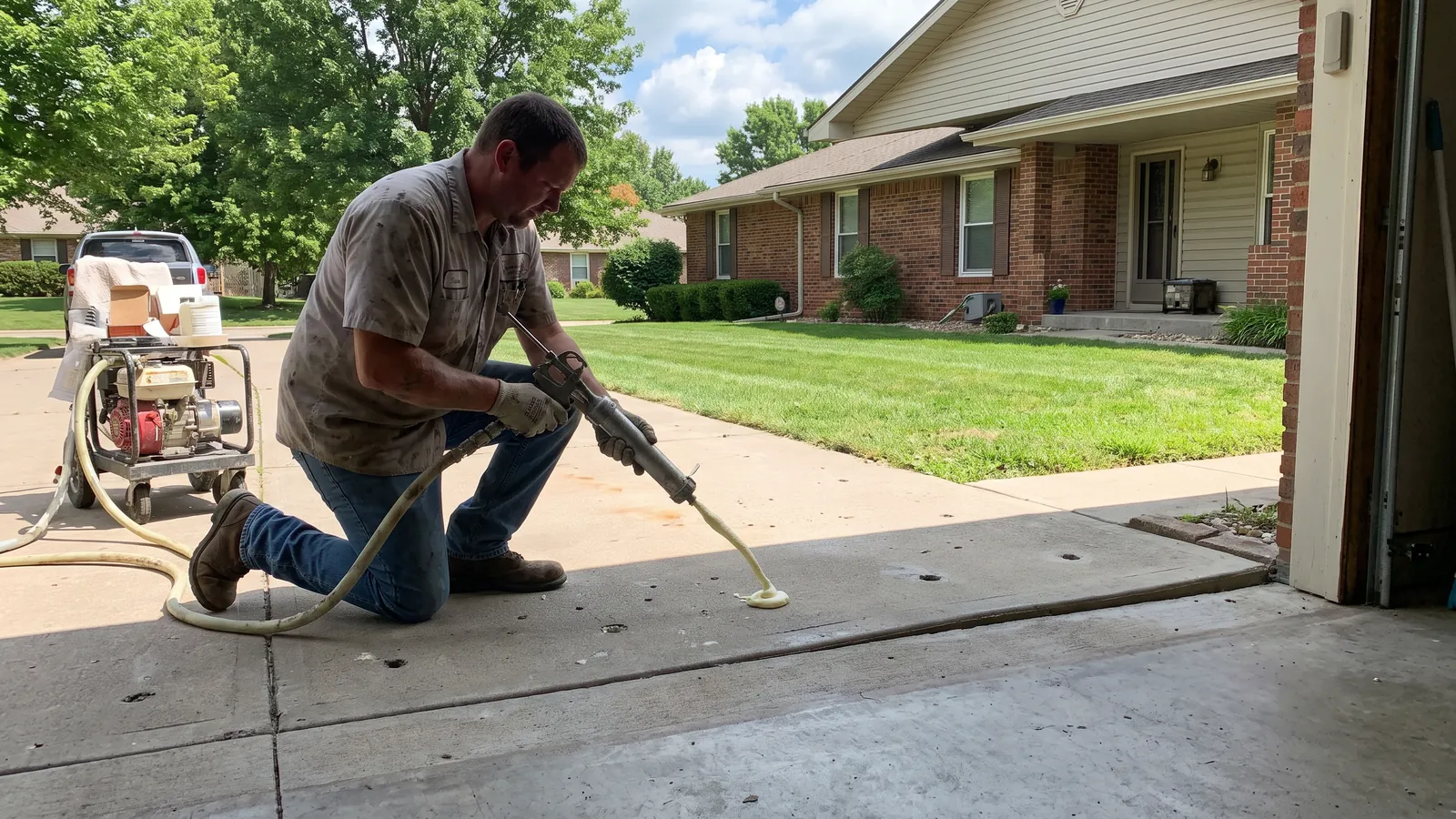
What repair can't fix is a slab that has heaved or sunk. A tipped panel needs lifting; a heaved one, usually over wet clay or a root, needs the cause removed and often the panel replaced. A driveway that's scaled to the stone across most of its area, cracked into a map, or dropped at the garage is past patching, and we'll say so and price the replacement instead, because a $900 repair on a $9,000 problem is a bad deal for you.
Every repair ends with the same question: where's the water coming from? A downspout, a sprinkler head, a grade that runs toward the house, an open joint. We write it down so the fix lasts. And we seal what we repair before the first winter with a breathable penetrating sealer; see sealing.
What's included
Cracks routed and sealed
Cleaned, routed to a uniform width and filled with a flexible polyurethane sealant that moves with the slab and keeps water and salt out.
Joints re-caulked
Control and expansion joints cleaned out and re-sealed so water stops getting under the panels.
Spalls and edges patched
Cut back to sound concrete, primed, patched with a polymer-modified repair mortar, finished to match.
Scaled surfaces resurfaced
A bonded polymer overlay over a sound, flat slab, broom-finished and sealed, where the top has flaked but the concrete hasn't failed.
Cause written down
Downspout, sprinkler, grade or open joint named in writing, so the repair holds.
Sealed before winter
A breathable penetrating sealer on the repaired area, and first-winter care instructions.
Concrete repair costs in Olathe, KS
| Job | Typical price | Notes |
|---|---|---|
| Crack routing and sealing | $8 – $15 per linear ft | Minimum charge applies to small jobs |
| Joint re-caulking | $3 – $6 per linear ft | Driveway and patio control joints |
| Spall or edge patch | $150 – $450 each | Depends on size and depth |
| Resurfacing overlay, scaled driveway | $4 – $8 per sq ft | Slab must be sound and flat |
| Single panel replacement | $900 – $2,200 | When a panel is past repair |
| Penetrating sealer after repair | $0.90 – $1.60 per sq ft | Whole slab recommended |
These are 2026 Johnson County ranges to help you budget. Your written price is itemized (removal, base, mix, thickness, reinforcement, finish, joints, sealer and any permit) and good for 30 days.
Recent work
Questions we get about concrete repair
Can you fix my driveway without replacing it?
Often. If the slab is flat, sound and the problem is cracks, open joints, a few spalls or a scaled top, repair or resurfacing works. If it's sunk, heaved, broken into pieces or scaled to the stone over most of its area, replacement is the better money, and we'll say which.
Will the repair match?
Crack and joint sealant is gray and sits slightly below the surface; it's visible up close. A patch is close but not invisible. An overlay gives a uniform new surface over the whole slab.
Why is the surface flaking?
Scaling: the paste at the surface was weakened by salt and freeze-thaw, usually because the mix was short on air, the surface was finished with bleed water on top, or salt went on it the first winter. See the salt damage guide.
How long does an overlay last?
Ten years or more on a sound slab that's sealed and kept clear of chloride deicers. It fails early on a slab that's still moving or holds water.
Is a cracked slab a safety problem?
A crack isn't; an offset is. Anything you can catch a toe on is a trip hazard, and on the public sidewalk the City may ask for it to be fixed.