Lifting sunken concrete instead of replacing it
Most of the sunken slabs in Olathe are sound concrete sitting on ground that moved. Lifting puts them back where they were in a morning, and you can use them the same day. We tell you when that's the right call and when it isn't.
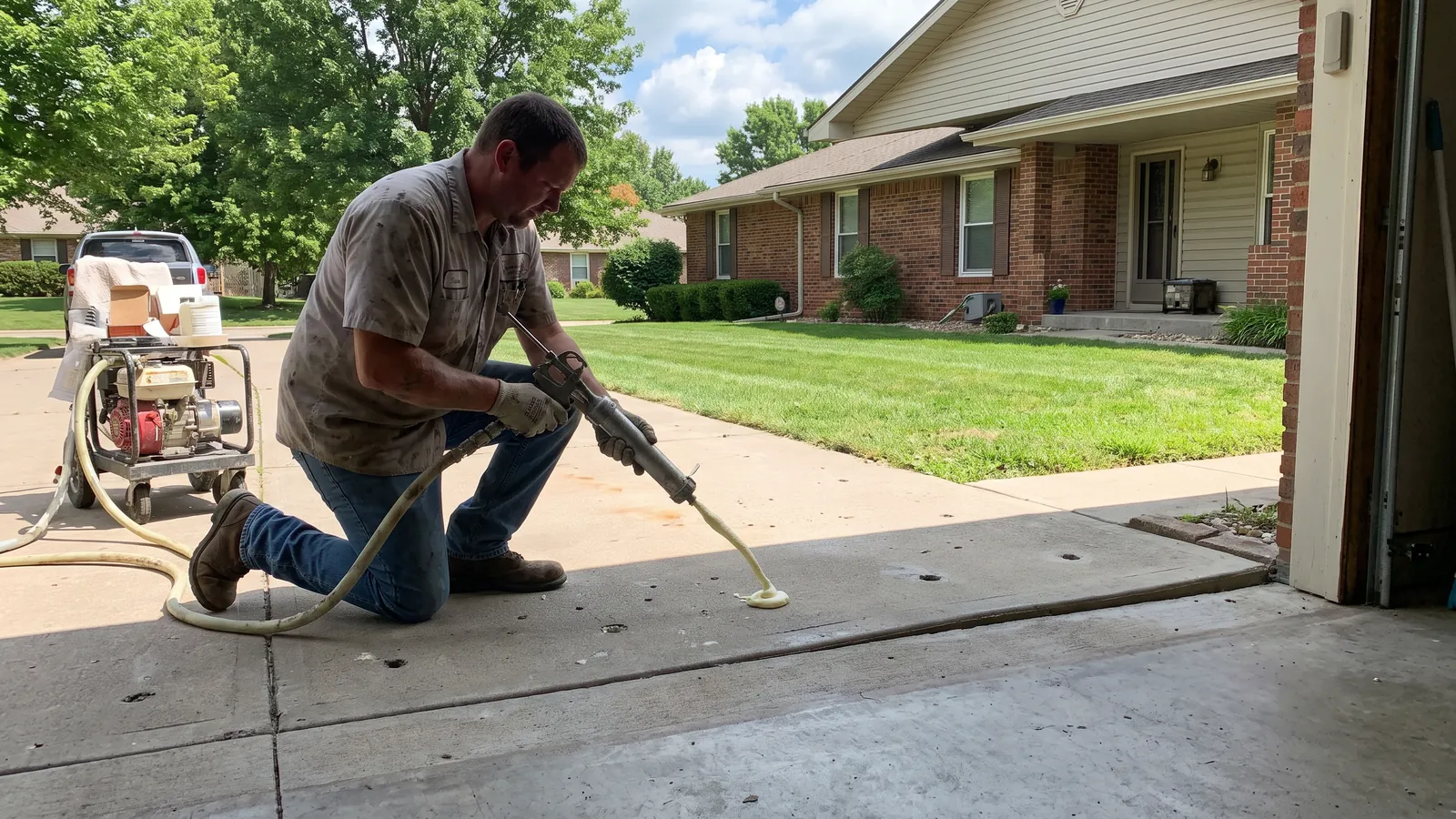
Concrete sinks here for the same reasons it cracks: the clay under it shrinks in a dry summer, the loose backfill along a foundation keeps settling for years, a downspout or a sprinkler head washes out the base at one corner, and the slab tips into the hole. The garage apron, the first panel of the driveway, the front stoop, the walk along the house and the patio slab by the back door are the usual ones. When the concrete itself is still sound, lifting it is the honest fix: it costs a fraction of replacement, it takes a morning, and it ends with the slab back at grade and the trip hazard gone.
There are two ways to do it. Polyjacking pumps a two-part polyurethane foam through dime-sized holes drilled in the slab; the foam expands in seconds, fills the void, and lifts the slab in a controlled way while we watch a level. It's light, so it doesn't add weight to ground that already failed, it cures in about 15 minutes, and the holes are small enough to disappear. Mudjacking pumps a cement-and-soil slurry through larger holes, about the size of a quarter or bigger. It's cheaper per job, it's heavier, the holes are more visible, and the fill can wash out again if the water problem isn't fixed. We do both. For a driveway, a garage apron or anything you'll drive on, we usually recommend foam; for a long run of sidewalk on a budget, mudjacking still makes sense.
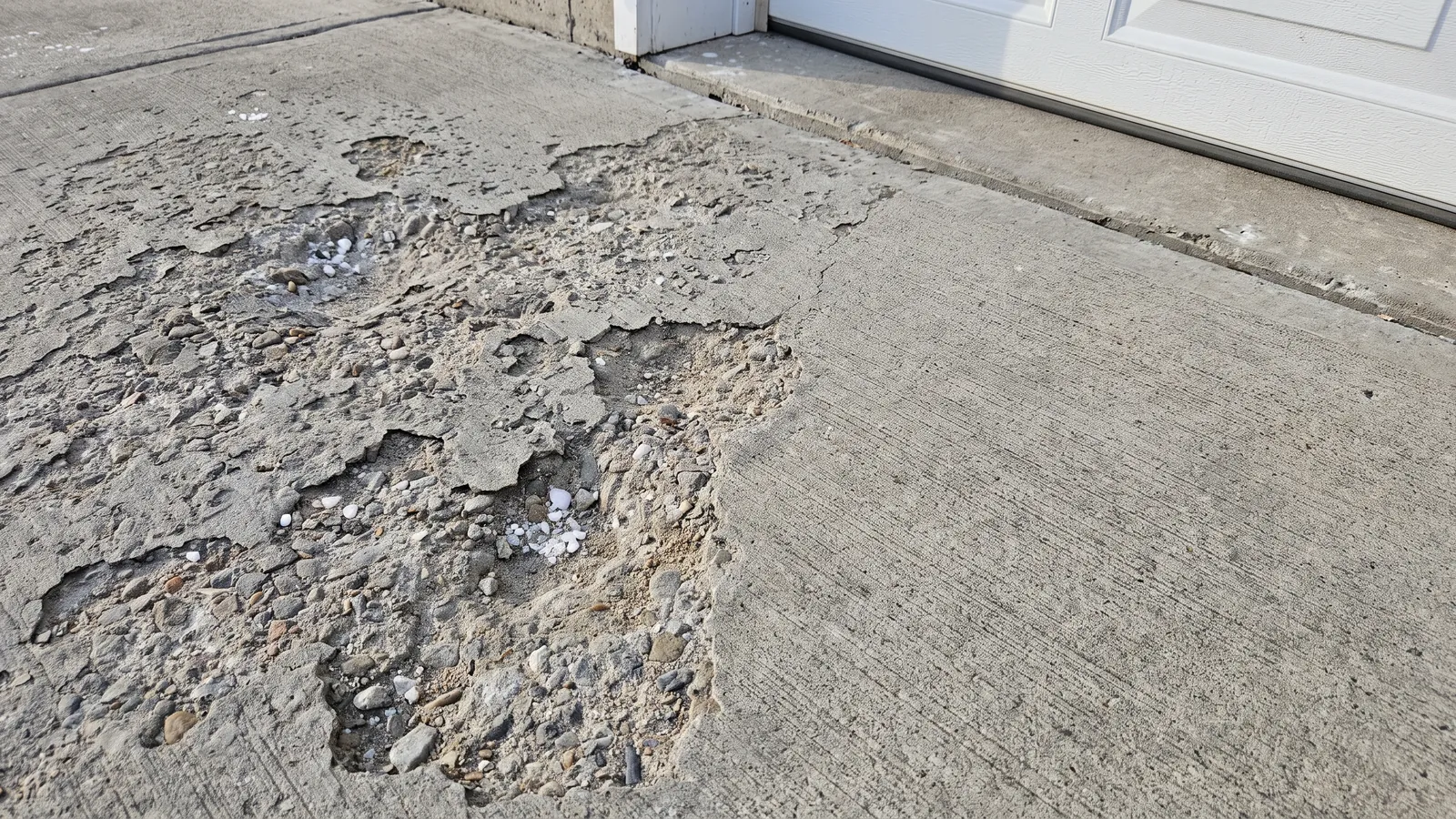
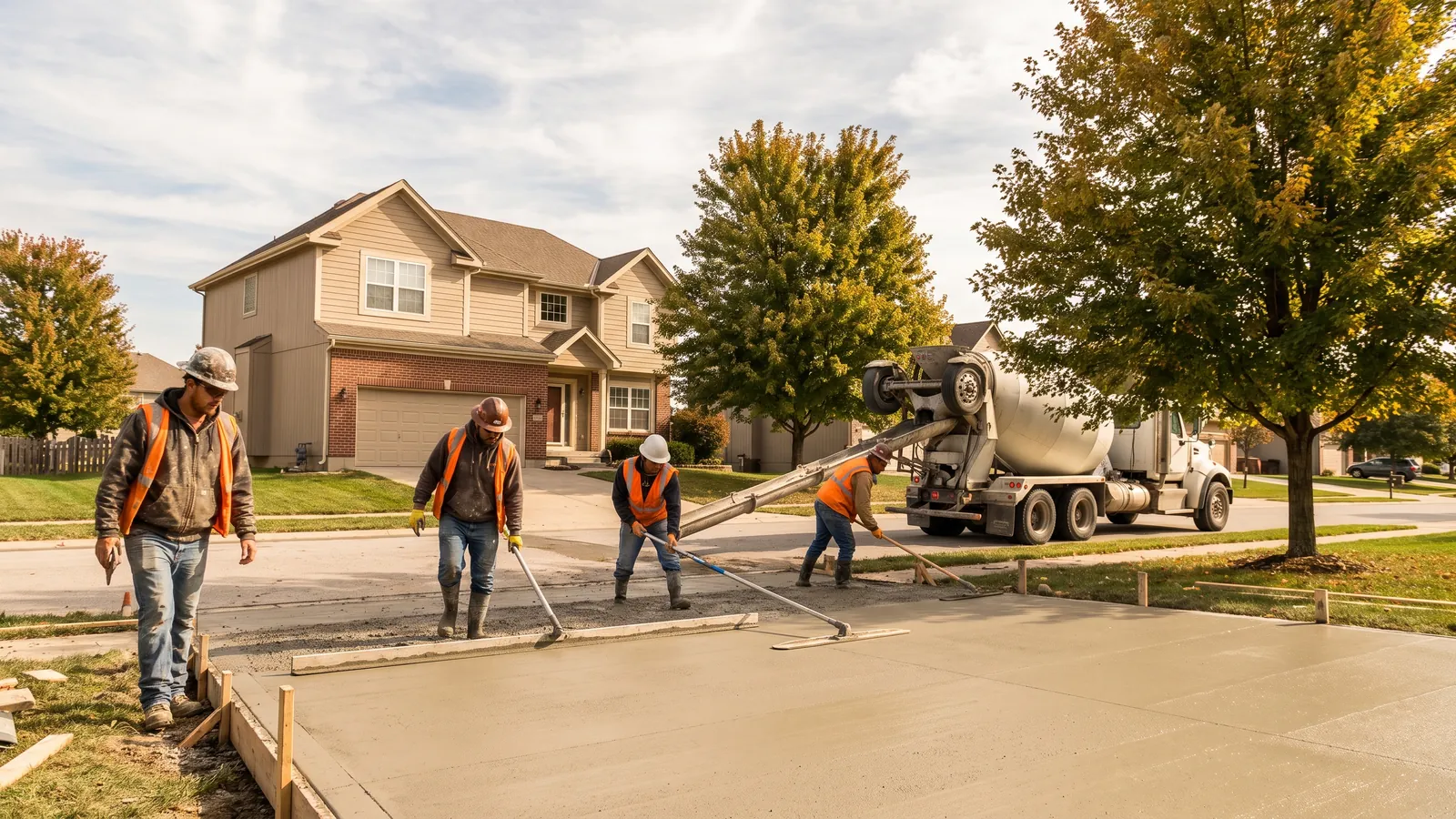
Lifting doesn't fix why the slab sank, so we look at the water first: the downspout that dumps at the corner, the sprinkler head that's been soaking the edge, the grade that runs toward the slab instead of away. If the slab is broken into pieces, scaled to the stone, or heaved up rather than down, lifting is the wrong tool and we say so; see replacement and repair. The mudjacking vs. polyjacking guide has the side-by-side.
What's included
Foam or slurry, your choice explained
Polyurethane foam for driveways, aprons and anything that carries a car; mudjacking where weight and holes matter less than price.
Lifted to a level, not by guess
Small holes drilled on a pattern, material pumped in stages, the slab watched with a level and a straightedge until it meets the next panel.
Joints and holes finished
Holes patched with a color-matched mix, the joint between lifted and unlifted panels re-caulked so water stays out.
The water problem named
Downspouts, sprinklers and grade checked and called out in writing, so the slab doesn't sink again.
Same-day use
Foam-lifted slabs can be walked on immediately and driven on the same day; mudjacked slabs the next day.
Honest fix-or-replace call
If the concrete is broken, scaled or heaved, we tell you lifting is wasted money and price the right fix instead.
Mudjacking and polyjacking costs in Olathe, KS
| Job | Typical price | Notes |
|---|---|---|
| Polyjacking a garage apron or one driveway panel | $500 – $1,500 | Depends on how far it has dropped and the void size |
| Polyjacking a two-car driveway, several panels | $1,500 – $4,000 | Versus $9,000+ to replace |
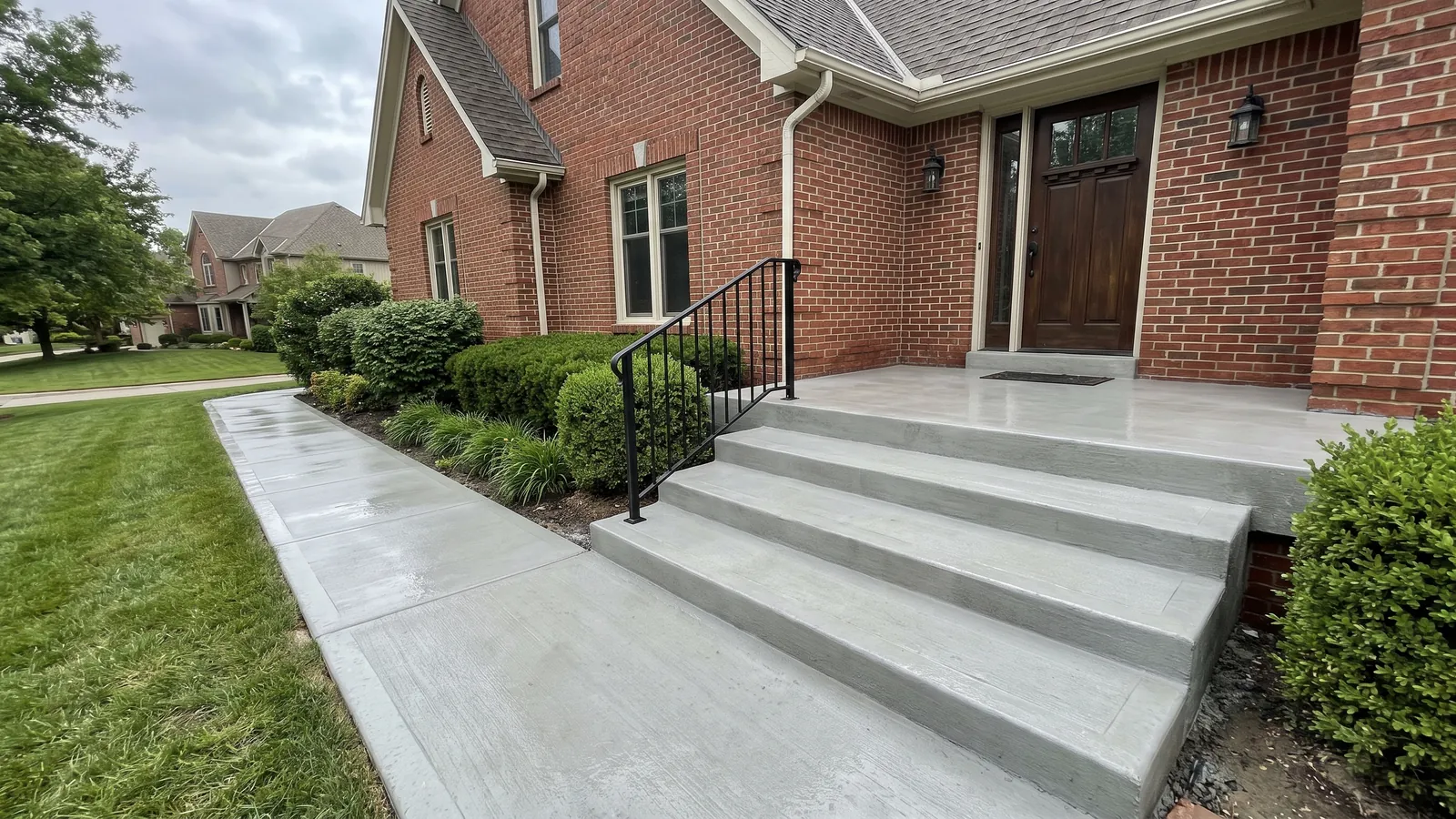
| Lifting a front stoop or steps | $400 – $1,100 | Where the stoop is sound |
| Sidewalk panels, foam | $150 – $400 per panel | Public sidewalk needs the City permit |
| Mudjacking, per job | $350 – $2,500 | Roughly 30–40% less than foam on the same slab |
| Re-caulking joints after lifting | $3 – $6 per linear ft | Keeps water out of the fix |
These are 2026 Johnson County ranges to help you budget. Your written price is itemized (removal, base, mix, thickness, reinforcement, finish, joints, sealer and any permit) and good for 30 days.
Recent work
Questions we get about mudjacking and polyjacking
Mudjacking or polyjacking: which is better?
Foam is lighter, cures faster, leaves smaller holes and lasts longer; it costs more. Mudjacking is cheaper and heavier. For a driveway, a garage apron or a stoop we usually recommend foam. For a long stretch of walk on a tight budget, mudjacking is fine.
How long does it last?
As long as the ground under it stays put. Foam doesn't wash out or break down; what undoes a lift is the same water that caused the sinking, which is why we point out the downspout or sprinkler head and ask you to fix it.
Can you lift a slab that has cracked?
If it's in two or three sound pieces, yes, each piece is lifted and the crack is sealed. If it's a jigsaw of small pieces, no; that's a replacement.
How much can you lift it?
Several inches is routine. A slab that has dropped more than that, or one heaved up by clay or roots, needs a different fix.
Will it crack the slab?
Not when it's done in stages with the material spread under the slab. Pumping too much in one spot is what breaks concrete, and we don't.